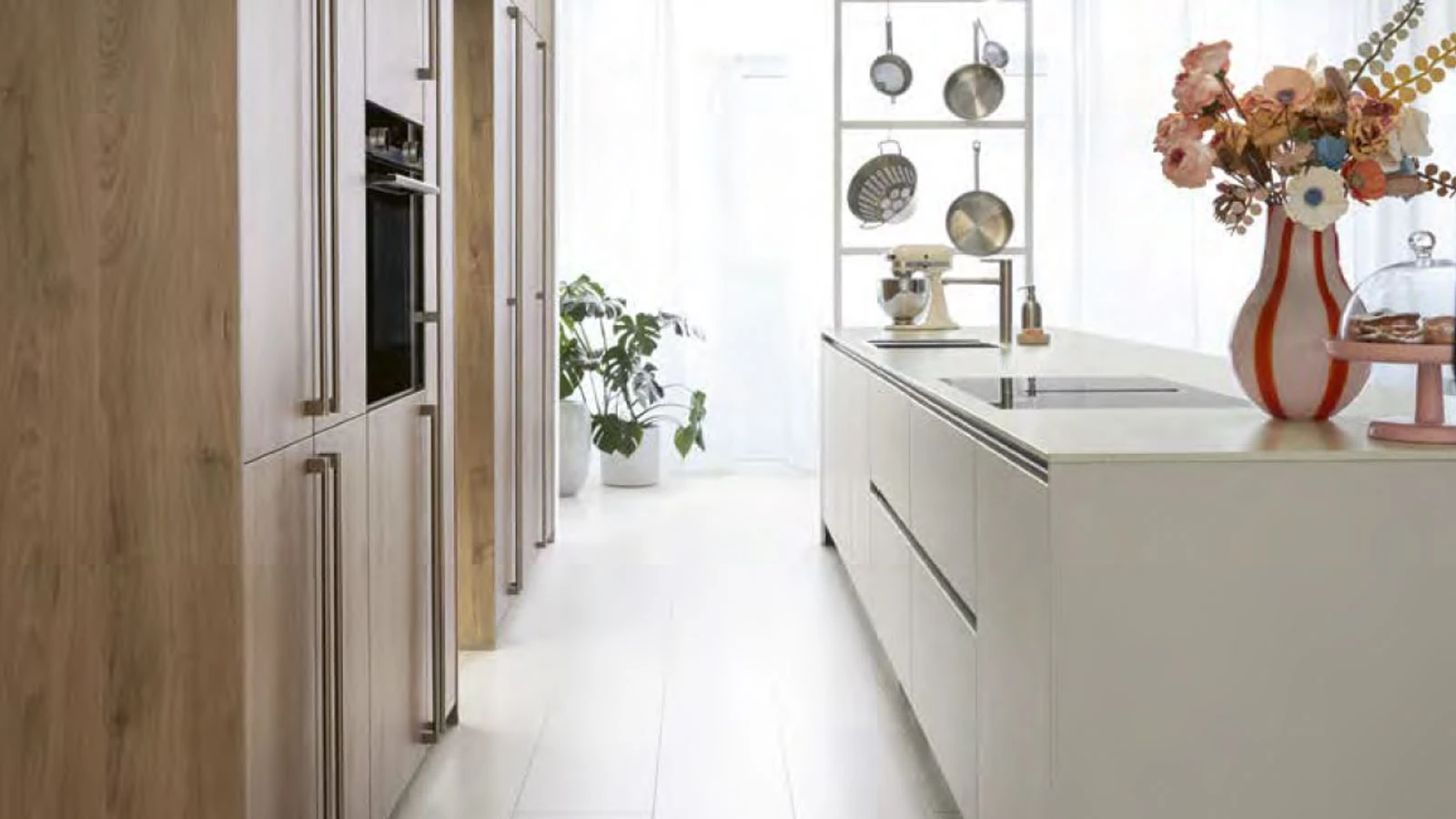
How Technology Can Improve Your Bespoke Kitchen
Most people don’t think about appliance technology when they’re planning a new kitchen. They think about doors, worktops, and layout. And those things matter enormously. But the appliances and fittings you choose can genuinely change how your kitchen works every single day.
Whether you’re upgrading a new-build kitchen that never quite delivered on its promise or planning a full kitchen refurbishment, the gap between what most homes currently have and what’s now available is larger than most people expect.
Here’s a look at some of the technology we’re seeing make a real difference in the bespoke kitchens and bathrooms we design and supply.
Why this matters for new build homeowners
If you moved into a new build in the last five years, the chances are the kitchen that came with it was functional at best. Builder-standard kitchens are designed to meet a price point, not to work as well as they could. The cabinetry is often adequate, but the appliances, taps, and fittings are rarely the most thoughtful choices. Over 93% of new-build homeowners in the UK report defects or issues with their homes, ranging from cosmetic faults to problems with kitchen units and fittings. (Source: TACMAN UK, 2025)
A bespoke kitchen designed around how you actually live is a different thing entirely. So is knowing which features will genuinely earn their place in your home.
Boiling water taps and filtered water at your fingertips
The Blanco boiling water tap is one of those things you don’t know you need until you have one. And you can never go back to a kettle! Instant boiling water, filtered cold water, and no more kettle sitting on the worktop. The worktop is clearer, hectic mornings feel calmer, and cooking is quicker.
These taps are designed to integrate cleanly into a bespoke kitchen design, replacing clutter with a single, considered fitting.
You can explore the full Blanco tap range at blanco.com/gb-en.
Induction hobs that deal with cooking smells
The Neff venting induction hob has an integrated extractor built directly into the hob itself. No overhead hood. No ducting running up the wall. It pulls cooking smells and steam downward before they reach the rest of the room.
This is particularly useful in open-plan kitchens, a layout common in both new-build homes and kitchen refurbishments, where walls have been removed to create more space. One of the design principles we work to at House of Harmony is reducing visual clutter. A venting hob makes a real contribution to that.
Ovens that do more than you’d think
Neff ovens have been quietly building in features that genuinely earn their place in a well-planned kitchen. The Slide & Hide door is the most striking example. Instead of swinging open and getting in the way, the door slides completely under the oven cavity. Anyone who has navigated around an open oven door while checking on food will understand immediately why this matters.
Then there are the models with built-in air fry and microwave functions, which provide a single, properly integrated appliance that replaces what might otherwise be three separate things competing for space. That kind of consolidation is exactly what a bespoke kitchen design should aim for.
Neff also produces self-cleaning ovens that heat to a high enough temperature to break down residue automatically. A practical feature rather than a luxury one, and one that genuinely saves time.
You can explore the full Neff range at neff-home.com.
As a Neff 5-Star MasterPartner, House of Harmony has access to the complete collection and can show you working displays in our Bury St Edmunds showroom.
A kitchen that cleans itself
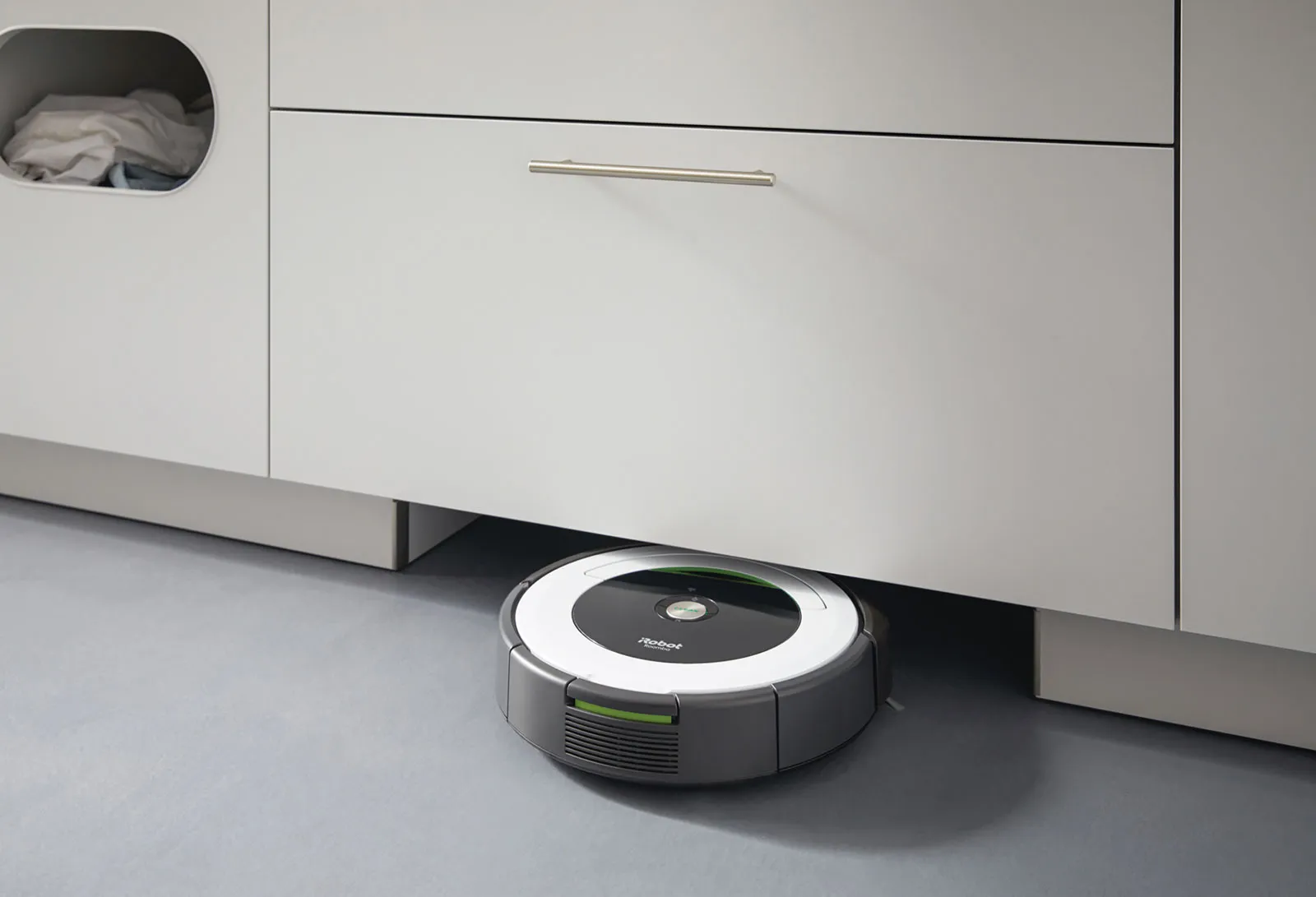
One of the newest pieces of integration technology is the built-in robot vacuum, designed to live permanently in the kitchen, hidden beneath the plinth of a base unit. Rather than a robot vacuum that charges in the corner of a room, the dock and service station are built into the cabinetry, so nothing is visible when it’s not in use.
The service station handles maintenance automatically: it empties the robot’s dust box, washes and dries the mop after each clean, and refills the cleaning detergent, all without anyone needing to think about it. It connects directly to the kitchen’s water supply and waste, so there’s no separate water tank to refill or empty.
For a kitchen designed around clean lines and minimal worktop clutter, this is a natural extension of the same thinking that goes into venting hobs and integrated taps. The technology is there, but it stays out of sight until it’s needed.
Integration
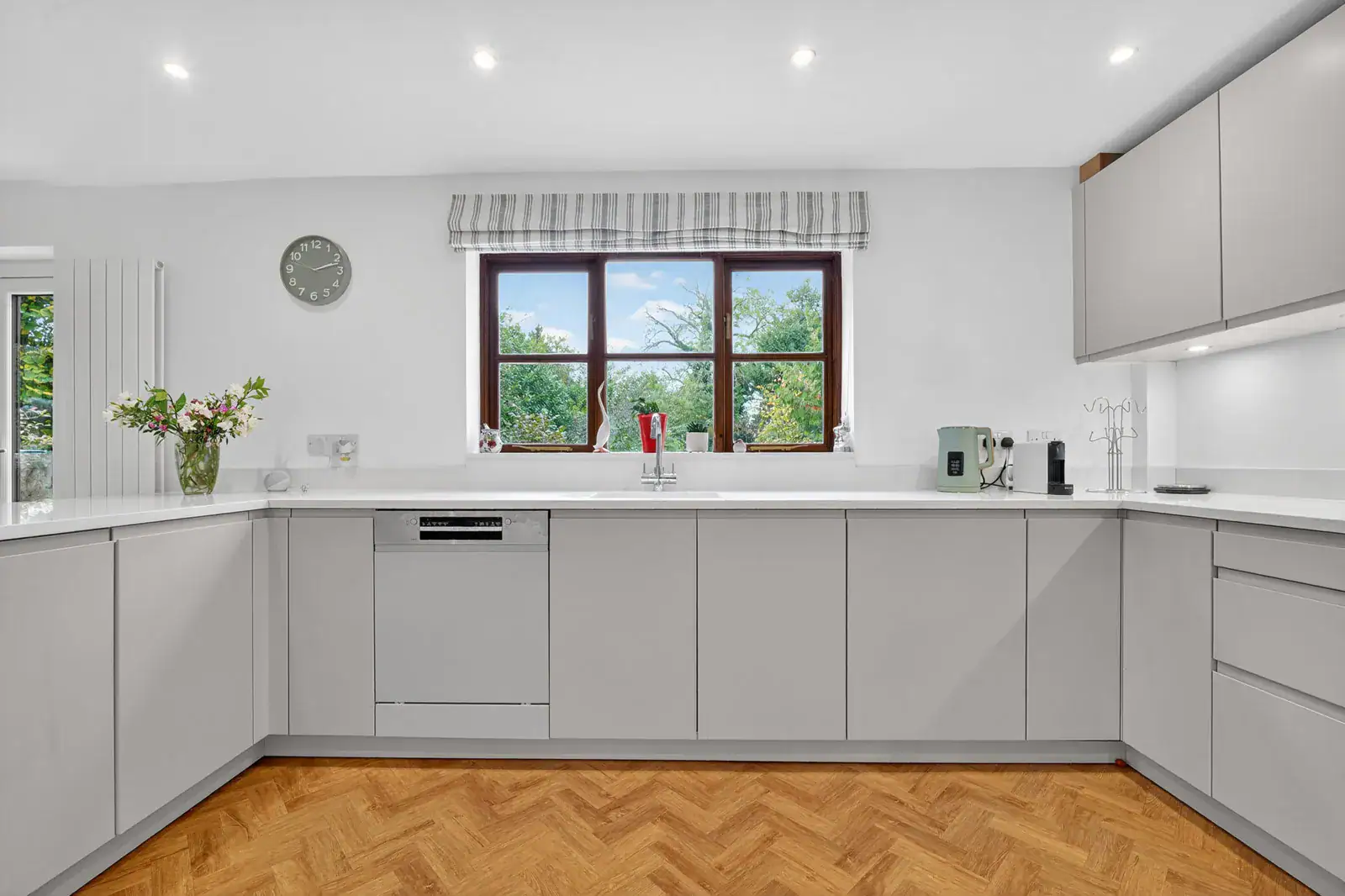
Integration is key, and a well-designed bespoke kitchen shouldn’t look like a collection of separate purchases. Appliances that disappear into the cabinetry, taps that replace multiple items on the worktop, extractors that remove the need for a hood, and a robot vacuum that lives behind the plinth rather than under the stairs all adds up to a kitchen that looks and feels considered rather than assembled.
This is true whether you’re refurbishing an older property or upgrading a new build. The technology is the same; what changes is how it fits your specific space and how you use it.
The numbers behind the investment
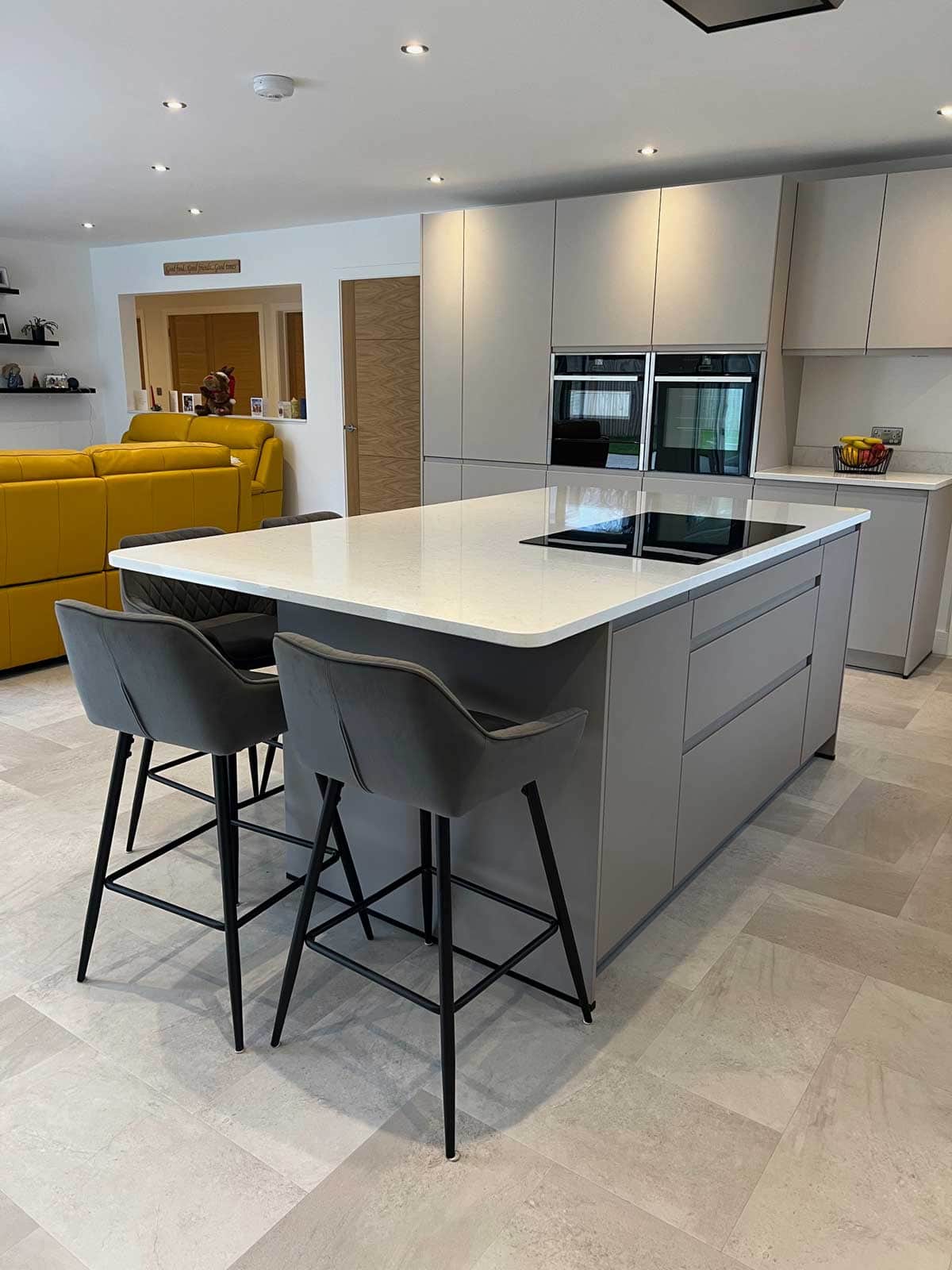
A bespoke kitchen or bathroom refurbishment isn’t just about daily enjoyment, though that matters too. The data on return on investment is worth knowing. A well-planned kitchen renovation can add 5–15% to the value of a UK property. (Source: Which?, 2026)
For homeowners investing in a property they intend to stay in for years to come, those figures matter. For those upgrading a new build kitchen that was never quite right, they matter too, both for daily quality of life and for long-term value.
Come and see it for yourself.
Our 45th Anniversary Weekend takes place on Friday, 17th to Sunday, 19th July.
Book an appointment for that weekend, and if your project goes ahead, you can choose a free upgrade: either a Neff Venting Induction Hob or a Blanco Boiling Water Tap.
Everything described in this article is available to see working in our showroom. There’s no better way to understand how these features feel in practice than to experience them in person.